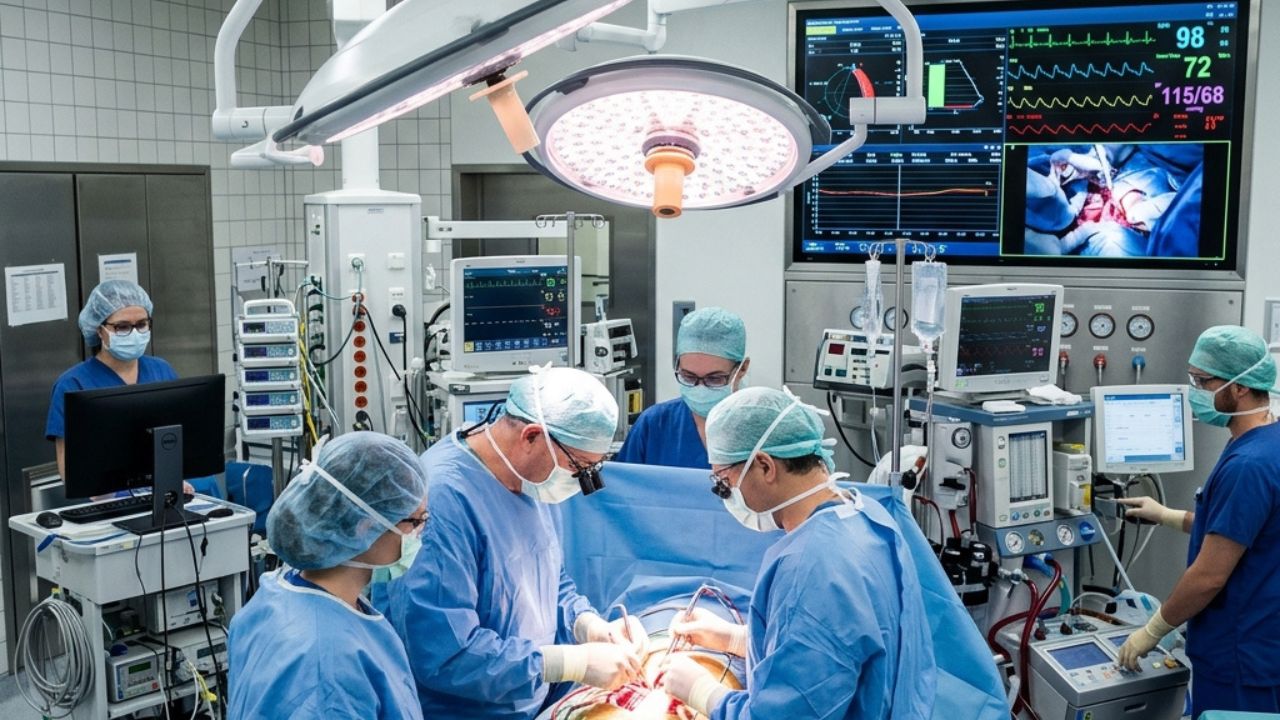
Choosing the right cardiac care center for heart surgery can significantly affect outcomes. The best centers combine high surgical volume, advanced technology, multidisciplinary teams, and strong post-operative care. This post covers the key factors to evaluate and highlights some of the world’s leading cardiac surgery institutions.
Heart surgery is one of the most consequential medical decisions a person can face. The stakes are high, the options are many, and the differences between centers—in outcomes, technology, and expertise—can be significant. Whether you’re managing a newly diagnosed heart condition or seeking a second opinion on a recommended procedure, knowing where to go matters enormously.
Cardiac care has evolved dramatically over the past three decades. Procedures that once required weeks of recovery are now performed through minimally invasive techniques with patients discharged in days. Robotic surgery, transcatheter valve replacement, and advanced heart failure programs have redefined what’s possible. But these capabilities aren’t evenly distributed. A handful of centers around the world have pulled ahead—distinguished by their surgical volume, research output, specialist depth, and patient outcomes.
This guide breaks down what separates exceptional cardiac care centers from average ones, profiles some of the most respected institutions globally, and gives you the framework to make a well-informed decision for yourself or a loved one.
Why Does Choosing the Right Cardiac Center Matter?
Not all heart surgery outcomes are equal—and the gap is wider than most patients realize.
According to research published in the New England Journal of Medicine, hospitals that perform higher volumes of complex cardiac procedures consistently report lower mortality rates and fewer complications. This isn’t coincidental. High-volume centers develop institutional expertise: surgeons operate more frequently, teams communicate more efficiently, and post-operative protocols are refined through repetition.
Beyond survival rates, the right center can also mean access to clinical trials, cutting-edge devices not yet widely available, and specialists who have seen every variation of a given condition. For complex cases—congenital heart defects, advanced heart failure, or rare valve disorders—the difference between a generalist cardiac program and a specialized center of excellence is rarely trivial.
What Factors Should You Consider When Choosing a Cardiac Care Center?
Does the center have high surgical volume and strong outcomes data?
Volume and outcomes are the most reliable proxies for quality. Look for centers that publish their mortality rates, complication rates, and 30-day readmission rates. In the United States, the Society of Thoracic Surgeons (STS) collects and publicly reports outcomes data for cardiac surgery programs—making it one of the most transparent resources available to patients.
Ask specifically about the volume for your procedure. A center that performs 500 coronary artery bypass grafts per year has fundamentally different institutional experience than one performing 80.
What specialist expertise and technology does the center offer?
Cardiac surgery is rarely a one-specialist affair. The best centers employ multidisciplinary heart teams—cardiologists, cardiac surgeons, electrophysiologists, imaging specialists, and heart failure nurses—who meet regularly to review complex cases together. This collaborative model reduces the risk of missed diagnoses and improves treatment planning.
Technology matters too. Look for centers with:
- Hybrid operating rooms capable of combining surgical and catheter-based interventions
- Transcatheter aortic valve replacement (TAVR) programs for high-risk valve patients
- Ventricular assist device (VAD) programs for advanced heart failure
- 3D echocardiography and cardiac MRI for precise pre-operative imaging
Is the center affiliated with an active research program?
Academic medical centers affiliated with universities are typically at the forefront of cardiac innovation. Patients treated at these institutions often have access to clinical trials for devices or treatments not yet commercially available. Active research programs also tend to attract the most experienced specialists—creating a concentration of expertise that benefits all patients, not just those enrolled in trials.
What does post-operative care and rehabilitation look like?
Recovery from heart surgery extends well beyond the operating room. Comprehensive cardiac rehabilitation programs—structured exercise, nutritional guidance, and psychological support—have been shown to reduce the risk of future cardiac events by up to 26%, according to the Cochrane Database of Systematic Reviews. A center that excels in surgery but offers limited follow-up care is leaving a critical part of patient recovery unaddressed.
Top Cardiac Care Centers for Heart Surgery
Cleveland Clinic Heart, Vascular & Thoracic Institute (Cleveland, Ohio, USA)
Cleveland Clinic has ranked as the number one hospital for cardiology and cardiac surgery in the United States by U.S. News & World Report for more than 25 consecutive years. Its cardiac program performs over 4,000 open-heart surgeries annually and is particularly recognized for complex valve repairs, aortic surgery, and heart transplantation.
The institution is home to several firsts in cardiac medicine, including the first face transplant in North America and pioneering work in minimally invasive mitral valve repair. Cleveland Clinic also operates one of the largest TAVR programs in the world, with outcomes consistently above the national average.
Mayo Clinic (Rochester, Minnesota, USA)
Mayo Clinic’s cardiovascular surgery program is renowned for its integrated, team-based model. Every patient case is reviewed by a multidisciplinary heart team before any surgical decision is finalized—a practice that has contributed to its exceptionally low complication rates.
Mayo’s program is particularly strong in congenital heart disease surgery for adults, complex arrhythmia management, and cardiac amyloidosis—a rare condition that many programs lack the expertise to treat effectively. The center’s research division has produced landmark studies on heart failure management and genetic cardiac conditions.
Texas Heart Institute (Houston, Texas, USA)
Founded by the pioneering cardiac surgeon Denton Cooley, the Texas Heart Institute has a history of surgical firsts—including the first total artificial heart implantation in a human in 1969. Today, it remains a global leader in mechanical circulatory support, advanced heart failure surgery, and cardiovascular research.
Texas Heart Institute’s affiliation with Baylor St. Luke’s Medical Center provides access to one of the largest heart transplant programs in the United States. The institute also operates an internationally recognized training program, meaning the expertise developed within its walls spreads outward to surgeons across the globe.
Harefield Hospital (London, United Kingdom)
As part of Royal Brompton & Harefield Hospitals, Harefield has been at the center of cardiac surgery in the UK since performing the country’s first heart transplant in 1983. It remains one of Europe’s busiest heart transplant and mechanical circulatory support centers.
Harefield specializes in adult congenital heart disease, pulmonary hypertension, and complex valve surgery. The hospital has a dedicated heart failure unit and works closely with the Royal Brompton site to offer a comprehensive range of cardiac and respiratory services under one institutional umbrella.
Deutsches Herzzentrum München (German Heart Center Munich, Germany)
The German Heart Center Munich is one of Europe’s highest-volume cardiac surgery programs, performing over 5,000 cardiac operations per year. It is especially well regarded for pediatric cardiac surgery—its team manages some of the most complex congenital defects seen anywhere in the world—as well as coronary artery surgery and heart transplantation.
The center’s outcomes data is among the most transparently reported in Europe, and its research output in cardiac imaging and interventional cardiology is internationally recognized.
Fortis Escorts Heart Institute (New Delhi, India)
For patients in South Asia or those seeking high-quality cardiac care at significantly lower cost, Fortis Escorts Heart Institute is consistently rated among Asia’s top cardiac centers. The institute performs more than 15,000 cardiac procedures annually and is credited with making advanced cardiac surgery accessible to a broader patient population.
Fortis Escorts is particularly recognized for its coronary artery bypass grafting (CABG) outcomes and its cardiac electrophysiology program, which has expanded rapidly to meet the growing demand for ablation procedures and device implantation across the region.
What Real Patients Say About Their Cardiac Surgery Experiences
Patient outcomes tell part of the story. Patient experiences tell the rest.
Across reviews and reported accounts from major cardiac centers, several themes emerge consistently: the quality of pre-operative communication, the attentiveness of nursing staff, and the clarity of post-discharge instructions. Patients who felt informed and supported throughout their care journey report significantly higher satisfaction, even when recovery was difficult.
One recurring observation from patients at high-volume centers is the confidence that comes from knowing a team has performed the same procedure hundreds of times. As one cardiac surgery patient from the Cleveland Clinic noted, “I asked my surgeon how many of these he’d done. When he said thousands, I actually felt my shoulders drop.”
That psychological reassurance—grounded in real institutional experience—is itself part of what makes centers of excellence valuable to patients navigating one of the most stressful events of their lives.
Making the Right Decision for Your Heart Health
Choosing a cardiac care center is not a decision to make under pressure or based on proximity alone. The factors that matter most—surgical volume, specialist depth, technology, outcomes transparency, and post-operative support—require deliberate research.
Start with outcomes data. In the US, the STS database is publicly searchable. In the UK, the National Institute for Cardiovascular Outcomes Research (NICOR) publishes hospital-level cardiac surgery data. For centers in other countries, look for peer-reviewed publications, institutional websites that publish annual outcome reports, and accreditation from recognized bodies like the Joint Commission International.
Seek a second opinion for any complex procedure. Most leading centers actively encourage this, and the best surgeons are never threatened by it. If a surgeon discourages you from getting another perspective, that itself is useful information.
Finally, consider the full care pathway—not just the surgery. A center with world-class surgeons and a weak rehabilitation program is not giving you the complete picture of what excellent cardiac care looks like. Your recovery begins in the operating room, but it doesn’t end there.
Your heart deserves the best possible care. Doing the research now, before a crisis forces a rushed decision, is one of the most important things you can do for your long-term health.
Frequently Asked Questions About Cardiac Care Centers
What makes a cardiac care center “world-class”?
World-class cardiac centers are defined by high surgical volumes, transparent outcomes reporting, multidisciplinary team structures, access to advanced technology (such as TAVR and hybrid operating rooms), and active research programs. Accreditation from international bodies like the Joint Commission International also signals a commitment to rigorous quality standards.
How do I find outcomes data for a cardiac surgery program?
In the US, the Society of Thoracic Surgeons (STS) publishes publicly accessible outcomes data for participating hospitals. In the UK, NICOR provides hospital-level cardiac surgery reports. For international centers, look for annual quality reports on institutional websites or peer-reviewed publications.
Is it worth traveling abroad for heart surgery?
For some patients—particularly those seeking lower-cost options or specialized expertise not available locally—medical travel to internationally accredited centers can be a viable choice. Centers in India, Germany, and the UK are frequently chosen by international patients. Thorough vetting of outcomes data, accreditation status, and post-operative support logistics is essential before making this decision.
What questions should I ask a cardiac surgeon before heart surgery?
Key questions include: How many times have you performed this specific procedure? What are your personal complication and mortality rates? Will I have access to a multidisciplinary heart team? What does post-operative rehabilitation look like? These questions help you assess both surgical experience and the quality of your overall care pathway.
What is the difference between a cardiac care center and a general hospital’s cardiac unit?
A dedicated cardiac care center focuses exclusively or primarily on heart conditions, typically offering greater surgical volume, more specialized staff, and deeper technology investment than a general hospital’s cardiac unit. For complex or high-risk procedures, the concentrated expertise of a dedicated cardiac center generally translates to better outcomes.