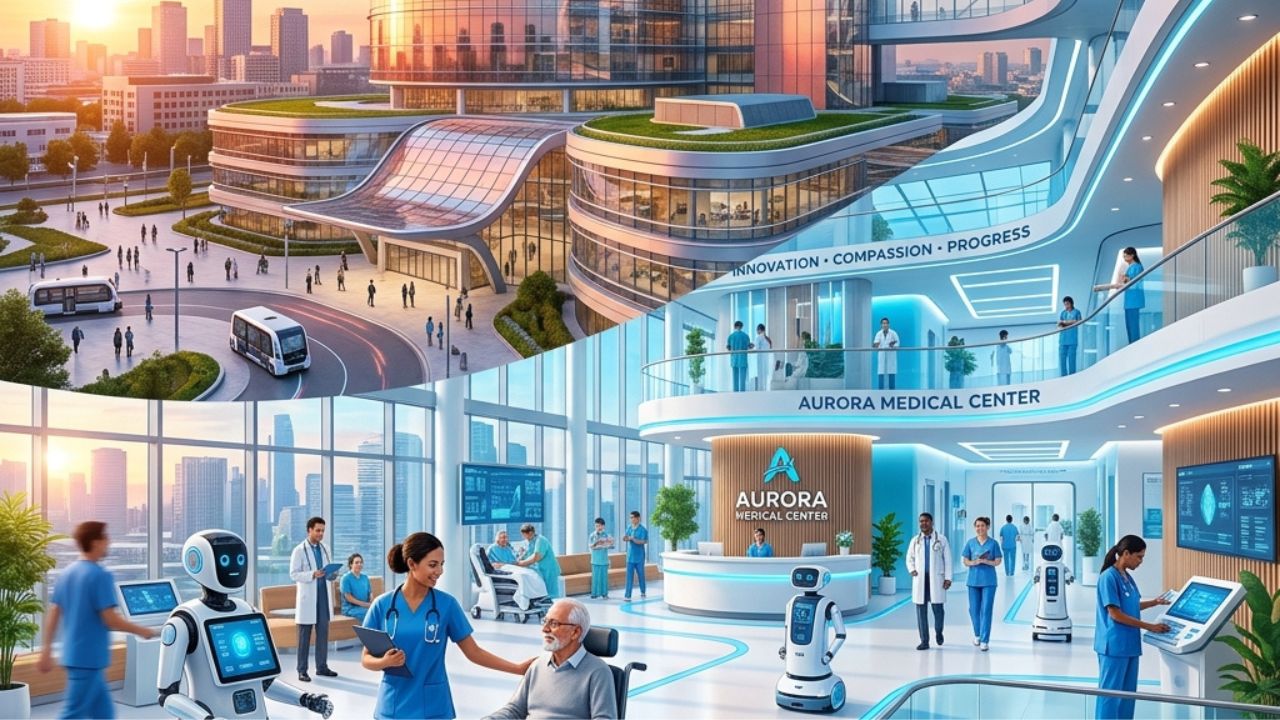
American hospital care is at a turning point. Driven by rising costs, an aging population, and rapid technological change, U.S. hospitals are being forced to rethink how they deliver care. This post explores the historical roots of modern hospital care, the current pressures shaping the industry, and why the next decade will define healthcare for generations to come.
Every year, roughly 36 million Americans are admitted to hospitals. They arrive for everything from routine surgeries to life-threatening emergencies, trusting that the institution at the other end of the gurney will be ready for them. But that trust is increasingly being tested.
American hospitals today are caught between competing forces. The demand for care is rising sharply, fueled by an aging Baby Boomer population and a growing burden of chronic illness. At the same time, costs are spiraling, workforces are stretched thin, and many rural hospitals are shutting their doors altogether. The system that once represented the gold standard of global medicine is showing its age.
This post examines how hospital care in America got to where it is—and what needs to change for it to survive and thrive. Drawing on historical context, current data, and the key pressures driving transformation, we make the case for why the future of hospital care matters not just to healthcare professionals, but to every American.
I. Executive Summary: The Evolving Landscape of American Hospital Care
American hospitals are in the midst of a fundamental transformation. What was once a relatively straightforward system—patients arrive, doctors treat, insurers pay—has become an extraordinarily complex ecosystem involving federal regulation, private equity, digital technology, and shifting patient expectations.
Several structural shifts are converging at once. The U.S. population is aging rapidly; by 2030, all Baby Boomers will be over the age of 65, dramatically increasing demand for inpatient and specialist care. Chronic diseases such as diabetes, heart disease, and obesity already account for roughly 90% of the nation’s $4.5 trillion in annual healthcare expenditures, according to the Centers for Disease Control and Prevention (CDC). Hospital systems are also contending with persistent staffing shortages—the American Hospital Association (AHA) estimates that the U.S. will face a shortage of up to 124,000 physicians by 2034.
Meanwhile, technology is reshaping what’s possible. Artificial intelligence platforms are accelerating diagnostics, robotic surgery is improving precision, and telehealth services—once considered a niche offering—have become a mainstream mode of care delivery. The COVID-19 pandemic acted as a pressure test for all of this, revealing both the remarkable resilience and the critical vulnerabilities of the American hospital system.
Understanding where hospitals are headed requires understanding where they came from.
II. Introduction: Defining Modern Hospital Care and Its Challenges
At its core, a hospital is a place where sick people receive medical treatment. But that definition barely scratches the surface of what modern hospitals are actually expected to do. Today’s hospitals function as research centers, trauma facilities, training institutions, community health hubs, and increasingly, as digital health platforms. They are among the largest employers in many American cities and towns.
The expectations placed on hospitals have expanded far beyond their original mandate—and the gap between what hospitals are asked to do and what they are resourced to do is growing.
A. Historical Context: From Almshouses to Advanced Medical Centers
The story of American hospital care begins in the 18th century, and it is not a flattering one. The earliest institutions that resembled hospitals were almshouses—essentially poorhouses where the sick, the elderly, and the destitute were housed together, often in squalid conditions. Medical care, such as it was, came as an afterthought.
The first true hospital in the United States, Pennsylvania Hospital, was founded in Philadelphia in 1751 by Benjamin Franklin and physician Thomas Bond. Its explicit purpose was to care for “the sick poor” and to provide a space for physicians to practice and teach. This dual mission—care and education—became the template for the American hospital model.
Throughout the 19th century, hospitals remained largely charitable institutions, dependent on donations and associated primarily with illness and death. Most Americans, if they could afford it, preferred to be treated at home. That changed dramatically at the turn of the 20th century, when advances in germ theory, anesthesia, and surgical technique transformed hospitals from places of last resort into centers of genuine medical progress.
The post-World War II era marked another watershed. The Hill-Burton Act of 1946 provided federal funding for hospital construction across the country, driving a massive expansion of hospital infrastructure. The introduction of Medicare and Medicaid in 1965 guaranteed payment for millions of previously uninsured Americans, reshaping hospital economics entirely. By the 1980s and 1990s, hospitals had evolved into large, technology-intensive institutions employing thousands of specialists and supported by complex networks of insurers, suppliers, and regulators.
Each decade added layers of complexity. Each advance in medical science created new demands. And today, the cumulative weight of that complexity is one of the central challenges facing American hospital care.
B. Current State: Key Statistics and Trends in U.S. Hospitals
The scale of the current American hospital system is staggering. According to the American Hospital Association’s 2023 Annual Survey, there are approximately 6,120 hospitals in the United States, with around 919,000 staffed beds. These institutions collectively employ more than 6 million people and handle hundreds of millions of patient interactions each year.
But the headline numbers tell only part of the story. Beneath them lie troubling trends.
Hospital closures are accelerating. Rural hospitals have been hardest hit. More than 140 rural hospitals have closed since 2010, according to the Chartis Center for Rural Health, with hundreds more identified as financially vulnerable. When a rural hospital closes, patients may have to travel an hour or more for emergency care—a delay that can be fatal.
Financial pressures are intensifying. A 2023 report from Kaufman Hall found that more than half of American hospitals operated at a negative margin. Inflation, rising labor costs, and supply chain disruptions have squeezed operating budgets across the board. The pandemic added billions in uncompensated costs, and many hospitals have yet to fully recover.
Staffing shortages are reaching a crisis point. The nursing shortage, in particular, has become severe. The National Council of State Boards of Nursing reported in 2023 that approximately 100,000 registered nurses left the workforce during the pandemic due to stress, burnout, and early retirement. Replacing experienced clinical staff takes years, not months.
Patient complexity is increasing. As Americans live longer, more of them arrive at hospitals with multiple simultaneous conditions—what clinicians call comorbidities. Managing a patient with heart failure, Type 2 diabetes, and early-stage kidney disease requires an entirely different level of coordination than treating a single acute episode. Hospitals were not designed for this kind of complexity.
At the same time, promising trends are emerging. Telehealth utilization, which expanded by more than 150% during the early months of the pandemic according to McKinsey & Company, has stabilized at levels far above pre-pandemic baselines. AI-assisted diagnostics are being adopted by major health systems. And value-based care models—which reward hospitals for keeping patients healthy rather than simply for the volume of services delivered—are gaining traction.
C. The Imperative for Change: Why the Future of Hospital Care Matters
The case for transforming American hospital care is not abstract. It is felt by the emergency room nurse working a 16-hour shift, the rural patient who drove two hours for a follow-up appointment, and the family navigating a labyrinthine billing system after a parent’s hospitalization.
Healthcare spending in the U.S. now represents approximately 18% of GDP—roughly twice the average of other high-income countries, according to the Commonwealth Fund. Despite that spending, American health outcomes on key metrics, including life expectancy, infant mortality, and preventable disease, consistently rank below those of peer nations.
This is the paradox at the heart of American hospital care: the most expensive system in the world is not producing the best results. The reasons are complex and contested, but they point consistently to structural inefficiencies, inequitable access, and a reimbursement model that rewards volume over value.
The stakes of getting this right extend far beyond the healthcare sector. Hospitals anchor local economies, particularly in rural and underserved communities. They are often the largest employer in their region. When they close or cut services, the effects ripple outward—into housing, employment, and population health.
More fundamentally, hospitals represent a social contract. They are the institutions Americans turn to at their most vulnerable moments. The expectation that a hospital will be there—staffed, equipped, and accessible—when needed is foundational to a functioning society. Eroding that expectation carries consequences that extend well beyond any individual patient encounter.
The Road Ahead for American Hospitals
The future of hospital care in America will be shaped by decisions being made right now—in hospital boardrooms, government agencies, medical schools, and technology companies. Those decisions will determine whether the American hospital evolves into a more efficient, equitable, and effective institution, or continues to strain under the weight of unresolved structural problems.
The historical record offers reason for cautious optimism. American hospitals have reinvented themselves before—during the Progressive Era, after World War II, and during the managed care revolution of the 1990s. Each transformation was disruptive. Each left the system better equipped to meet the demands of its time.
The current transformation will be no different. But its success depends on clear-eyed honesty about the scale of the challenges involved, genuine commitment from policymakers and healthcare leaders, and a willingness to center patient outcomes—rather than system revenue—as the primary measure of success.
The future of hospital care in America is not yet written. The choices made in the next decade will determine who writes it.
Frequently Asked Questions
What are the biggest challenges facing American hospitals today?
The primary challenges include chronic financial pressures, severe staffing shortages, rising patient complexity due to an aging population, and rural hospital closures. According to the American Hospital Association, the U.S. faces a projected shortage of up to 124,000 physicians by 2034, compounding existing workforce gaps in nursing and allied health professions.
Why are rural hospitals closing at such a high rate?
Rural hospitals operate on thin financial margins and serve smaller, older, and often poorer patient populations. When reimbursement rates fail to cover operating costs—particularly in states that have not expanded Medicaid—rural hospitals cannot sustain operations. More than 140 rural hospitals have closed since 2010, according to the Chartis Center for Rural Health.
How is technology changing hospital care in the U.S.?
Artificial intelligence is being used to accelerate diagnostics, flag sepsis risk, and streamline administrative processes. Telehealth has become a mainstream mode of care delivery, with utilization stabilizing at levels far above pre-pandemic baselines according to McKinsey & Company. Robotic-assisted surgery and remote patient monitoring are also expanding across major health systems.
What is value-based care and why does it matter for the future of hospitals?
Value-based care is a reimbursement model that rewards healthcare providers for patient health outcomes rather than the volume of services delivered. It represents a structural shift away from the traditional fee-for-service model, which critics argue incentivizes overtreatment. Adoption of value-based contracts is growing, though the transition remains uneven across the industry.
Why does the U.S. spend so much on healthcare but rank poorly on key health outcomes?
The U.S. spends approximately 18% of its GDP on healthcare—roughly twice the average of peer nations—yet consistently underperforms on metrics such as life expectancy and preventable mortality, according to the Commonwealth Fund. Structural inefficiencies, fragmented coverage, administrative overhead, and inequitable access are among the factors most frequently cited by health policy researchers.